

IN THIS ARTICLE
Menopause may influence your gum health, but hormones are only part of the picture. We're exploring what research reveals about estrogen, inflammation, and periodontal disease, which changes deserve attention, and how you can protect your gums through midlife and beyond.
Your gums are surprisingly good communicators. They've been responding to hormonal changes since puberty, sometimes becoming more sensitive around your period or during pregnancy. So it makes sense to wonder whether they have something to say about menopause, too.¹
Maybe you've noticed a little pink in the sink when you brush. Perhaps your gums feel tender, or a tooth looks a little longer than it used to. Are these just ordinary changes with age, or could hormones be part of the story?
Why your gums care about estrogen
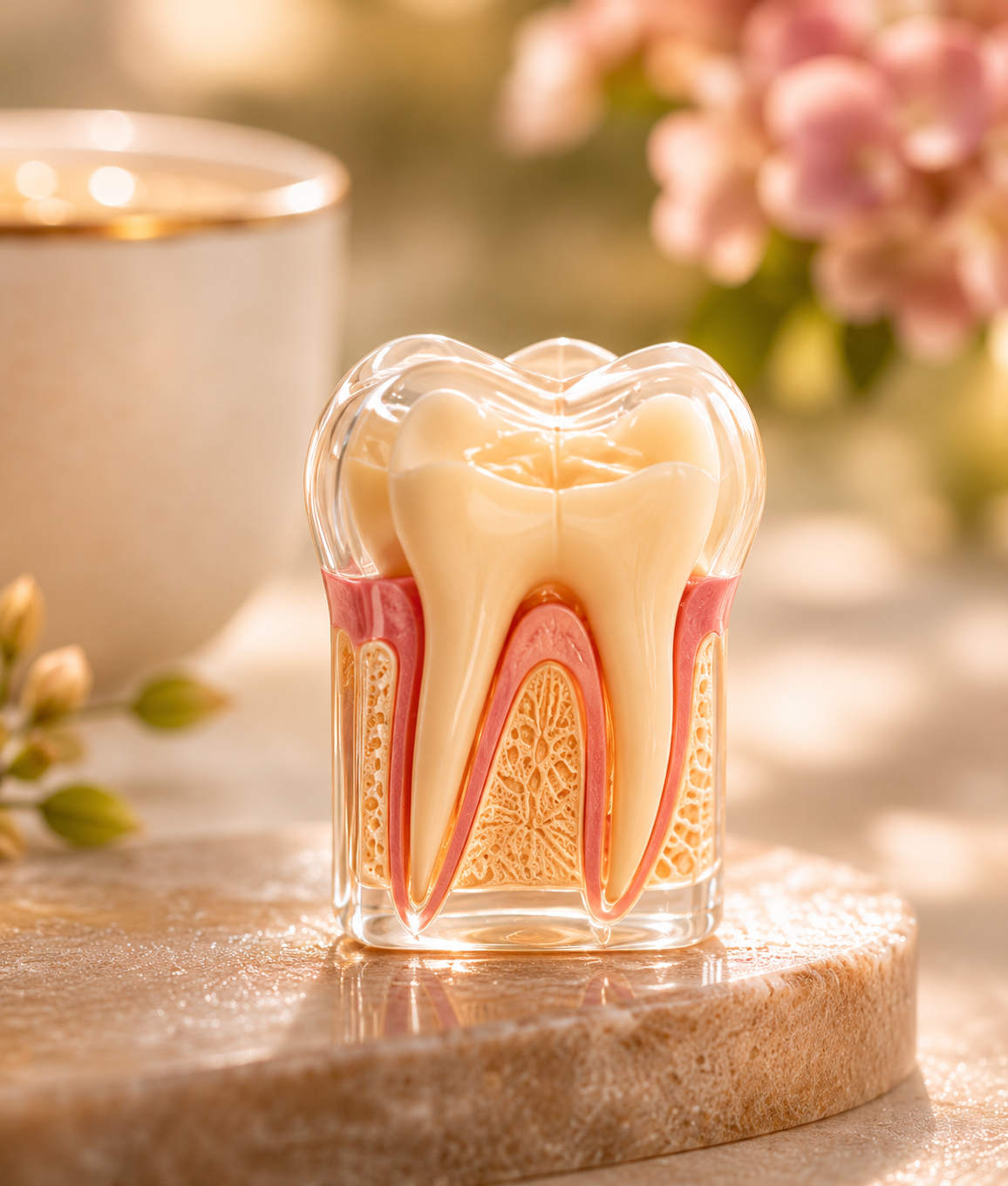
Your gums aren't just the pink tissue framing your smile. They're part of a larger support system, including ligaments and bone, that keeps your teeth securely in place.
And, interestingly, gum tissue contains receptors for estrogen.² Researchers believe that changes in estrogen levels may influence how these tissues respond to inflammation and how the bone supporting your teeth is maintained.³
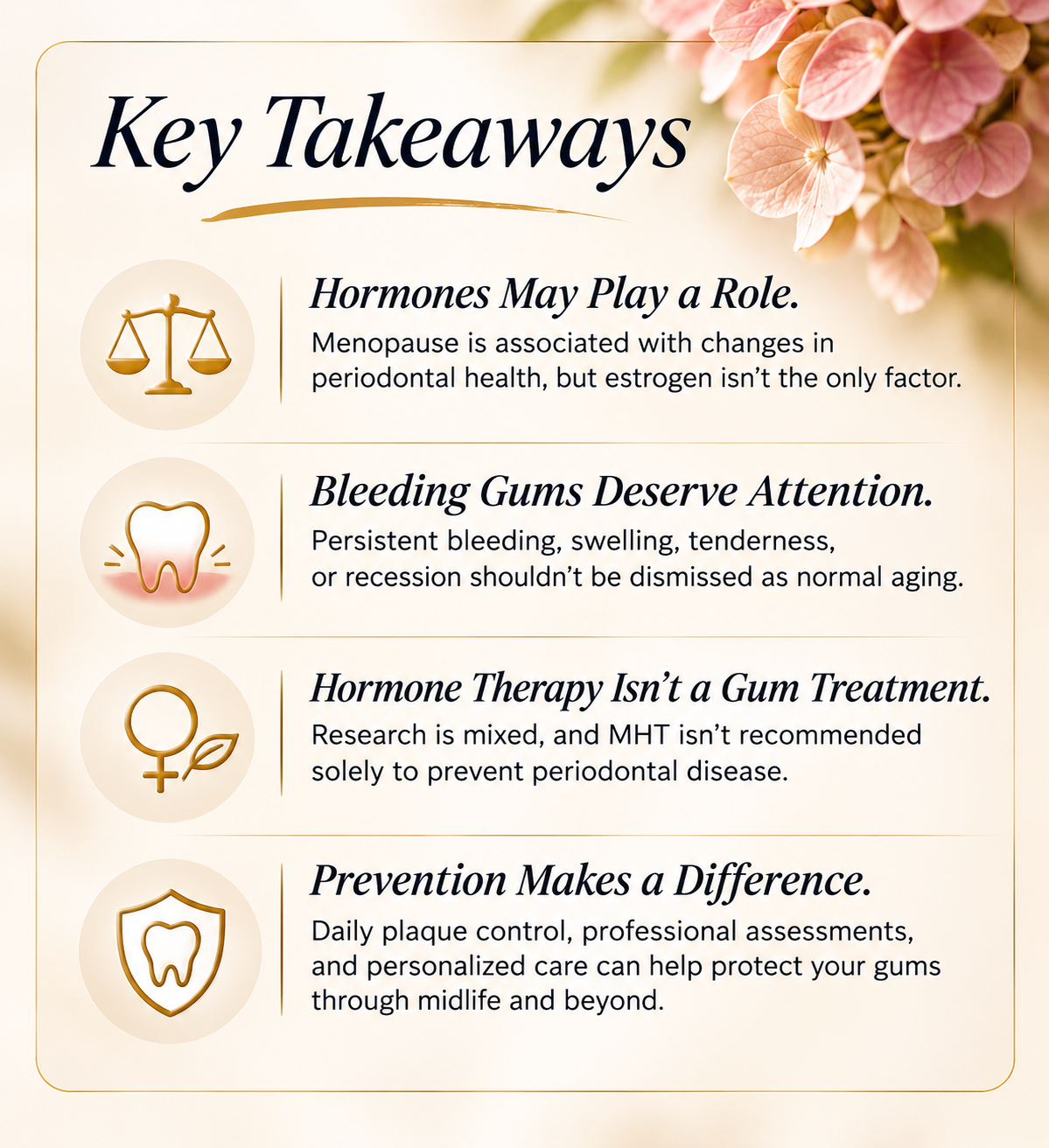
But here's an important distinction: having estrogen receptors doesn't mean every gum problem during menopause is caused by declining estrogen. Plaque, smoking, diabetes, medications, genetics, and aging all play a role.
So what does the research actually tell us?
What the research shows (and what it doesn't)
A 2026 systematic review found that postmenopausal women tended to have deeper gum pockets and greater loss of the tissue attaching gums to teeth compared with premenopausal women. However, many studies couldn't fully separate the effects of menopause from aging.⁴
One population-based study that accounted for age, smoking, and other factors found that postmenopausal women who weren't using hormone therapy had approximately twice the odds of periodontitis compared with premenopausal women.⁵ That's an association worth investigating, not proof that hormones alone are responsible.
And there's another connection worth exploring: bone health. Research has found that postmenopausal women with lower bone density also tend to have greater periodontal attachment loss.⁶ We'll explore that relationship in more detail in our next article.
When your gums start sending signals
A little bleeding when you floss might seem harmless, especially if it stops quickly. But healthy gums generally shouldn't bleed with gentle cleaning.
Bleeding, redness, swelling, or tenderness can be signs of gingivitis, the early stage of gum inflammation. Left untreated, periodontal disease can progress to damage the tissues and bone supporting your teeth.
Persistent bad breath, receding gums, or loose teeth are other reasons to schedule an evaluation.
And please don't abandon your floss because you see blood! Gentle, consistent cleaning helps control the plaque that drives inflammation. If bleeding persists, your dental team should investigate rather than simply telling you to brush harder.¹
Could hormone therapy help?
It's a reasonable question. If hormones influence gum tissues, could menopause hormone therapy (MHT) offer some protection?
Possibly, but the evidence is mixed.
Some studies have associated MHT with better periodontal outcomes, while others have found no meaningful difference.⁷⁻⁸ The research isn't strong enough to recommend hormone therapy specifically to prevent or treat gum disease.
What we can do is recognize hormonal changes as one possible factor, consider your broader health history, and build a preventive plan around your individual needs.
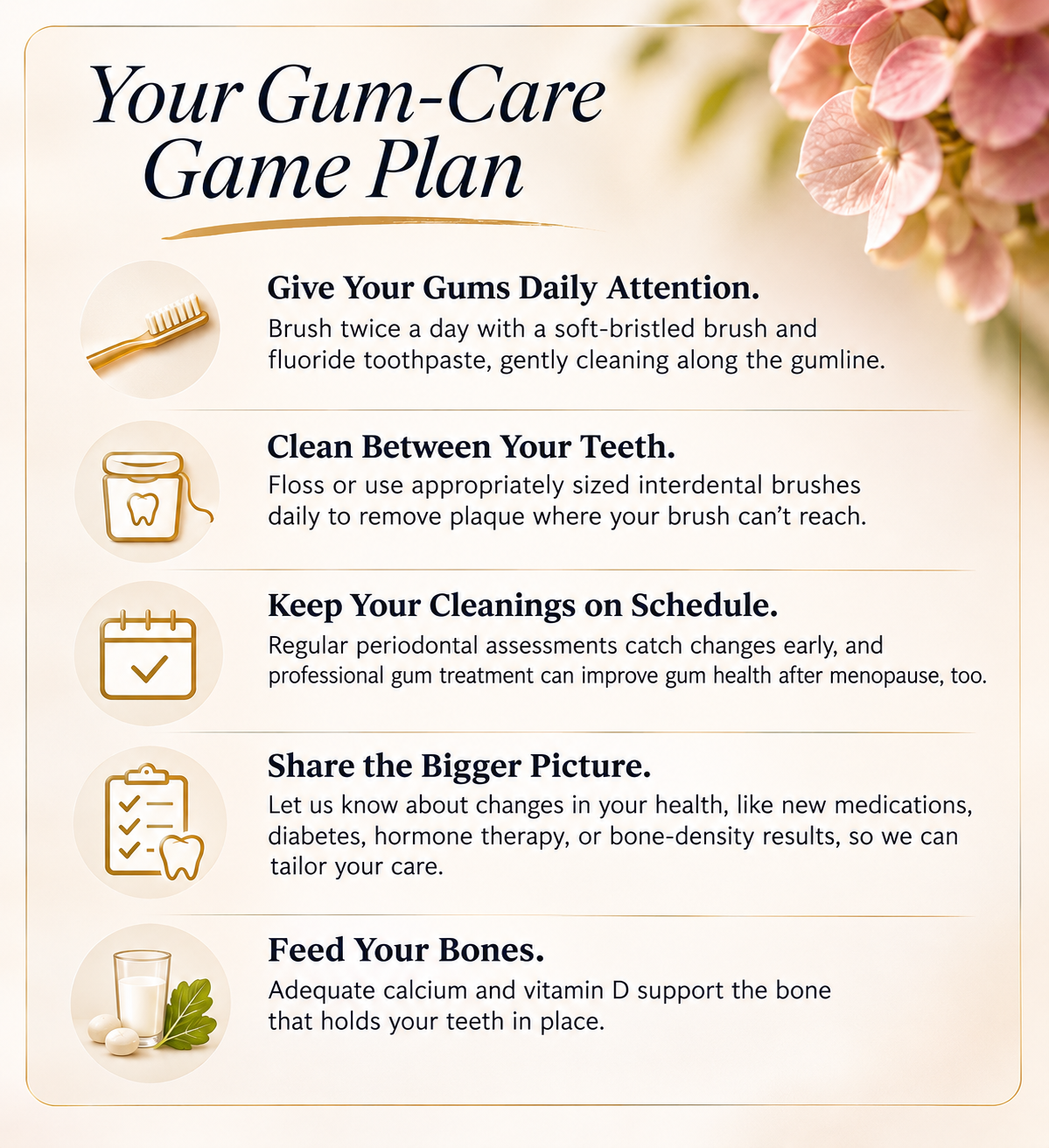
Your gum-care game plan
Give your gums daily attention. Brush twice a day with a soft-bristled toothbrush and fluoride toothpaste, gently cleaning along the gumline. Clean between your teeth daily with floss or appropriately sized interdental brushes.
Don't ignore the warning signs. Bleeding, persistent tenderness, swelling, or recession deserve a conversation with your dentist, even if nothing hurts.
Make your preventive care personal. Regular periodontal assessments help identify changes early. If gum disease develops, professional treatment can improve periodontal health after menopause, too.⁹ Your dental team can recommend an appropriate maintenance schedule based on your risk.
Share the bigger picture. New medications, diabetes, hormone therapy, and bone-density findings can all provide useful context for your dental care. And if you have concerns about osteoporosis or nutritional deficiencies, discuss them with your medical provider.
Let's keep the conversation going
“My gums have been bleeding lately. Can we take a closer look?”
That's all you need to get the conversation started.
There's still much to discover about how hormonal changes influence women's oral health. At Lit Dental, we're committed to continuing our education, advocating for more research into women's health, and using that growing knowledge to provide more thoughtful, individualized care.
Because your gums have something to say. And we believe they're worth listening to.
References
Jawed STM, Tul Kubra Jawed K. Understanding the Link Between Hormonal Changes and Gingival Health in Women: A Review. Cureus. 2025;17(6). https://doi.org/10.7759/cureus.85270
Välimaa H, et al. Estrogen receptor-beta is the predominant estrogen receptor subtype in human oral epithelium and salivary glands. J Endocrinol. 2004;180(1):55–62. https://doi.org/10.1677/joe.0.1800055
Ciesielska A, et al. Changes in the Oral Cavity in Menopausal Women—A Narrative Review. Int J Environ Res Public Health. 2022;19(1):253. https://doi.org/10.3390/ijerph19010253
Civiletto-S. Martín F, et al. Impact of menopause on clinical periodontal outcomes: A systematic review. Clin Oral Investig. 2026;30:143. https://doi.org/10.1007/s00784-026-06813-y
Haas AN, et al. Association among menopause, hormone replacement therapy, and periodontal attachment loss in southern Brazilian women. J Periodontol. 2009;80(9):1380–1387. https://doi.org/10.1902/jop.2009.090082
Penoni DC, et al. Bone density and clinical periodontal attachment in postmenopausal women: A systematic review and meta-analysis. J Dent Res. 2017;96(3):261–269. https://doi.org/10.1177/0022034516682017
Man Y, et al. Hormone replacement therapy and periodontitis progression in postmenopausal women: A prospective cohort study. J Periodontal Res. 2024. https://doi.org/10.1111/jre.13258
Romandini M, et al. Hormone-related events and periodontitis in women. J Clin Periodontol. 2020;47(4):429–441. https://doi.org/10.1111/jcpe.13248
Mayta-Tovalino F, et al. Effect of nonsurgical periodontal therapy in pre and postmenopausal women with periodontitis: A systematic review. J Int Oral Health. 2023;15(5):424–430.